



Real Chicago Dog Training Success Stories: Two Trainers, Proven Results
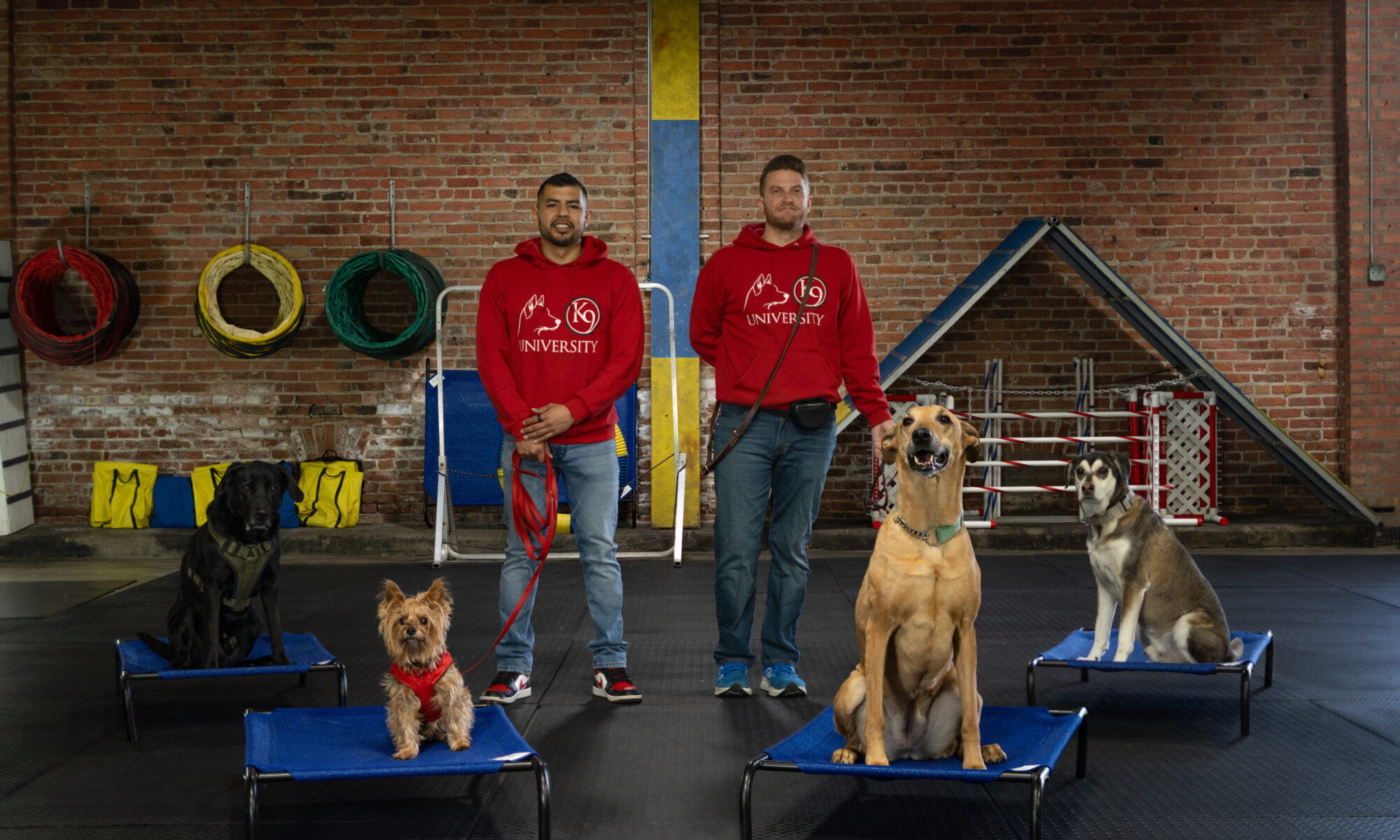
Your dog lunges at every other dog on walks. Three trainers have already given up. Your neighbors cross the street when they see you coming. You’re starting to wonder if rehoming might be the only option left.
Sound familiar?
Meet Indy and Blue: two challenging dogs whose Chicago families were at their breaking point. Both had been turned away by multiple trainers. Both seemed destined for a life of isolation and stress. But in a matter of weeks, everything changed.
Here’s how K9U’s experienced trainers Jonathan Polich and Pablo Maldonado transformed these challenging dogs using science-based methods, trust building, patience, and an approach that gets inside dogs’ heads rather than just commanding obedience. These documented transformations reveal the specific techniques, timelines, and breakthrough moments that turned reactive, fearful dogs into calm, confident companions.
More importantly, they show what becomes possible when trainers refuse to give up on dogs others won’t accept.
Meet K9U’s Specialized Training Team
Jonathan Polich – Lead Dog Trainer with 20+ Years Experience
Jonathan Polich brings two decades of experience to his role as K9U’s Lead Dog Trainer. His approach centers on dog psychology rather than simple obedience commands.
“What I talk about is dog psychology—getting inside the dog’s head,” Jonathan explains. “If you can’t understand what they’re going through mentally, then you’re behind training-wise.” This focus on canine psychology, combined with his honest approach about realistic expectations, sets the foundation for K9U’s training success.
Jonathan’s approach follows science-based methods that you can learn more about in our K9 Training programs.
“Trust is everything,” he emphasizes. “If the dog doesn’t trust you, the dog is still continuously going to be past threshold.” His patient approach lets dogs dictate the pace: “I’m not going to force the threshold. I’m not going to force the dog to do things.”
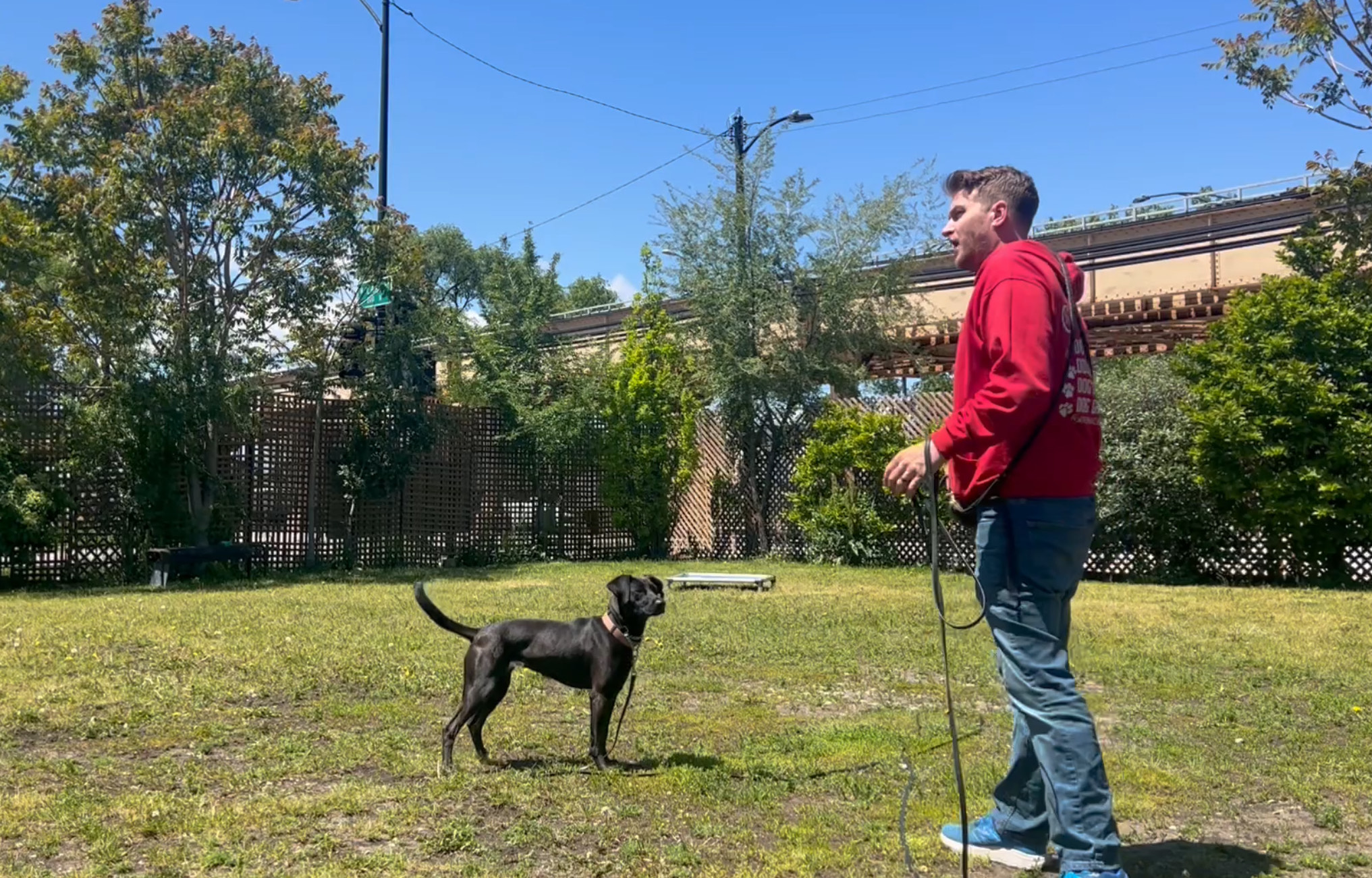
Pablo Maldonado – Dog Trainer with International Experience
Pablo Maldonado brings more than a decade of experience to his work, including running his own dog training businesses in Mexico before joining K9 University four years ago.
His training philosophy is simple but powerful: success depends on teamwork.
“At the end of the day, as I always tell my clients, it’s about teamwork,” Pablo explains. “I can work with a dog every single day and show the progress, but if the owner isn’t able to handle their own dog with confidence, then my job isn’t complete. True success happens when the dog and the family learn to work together.”
Pablo specializes in working with reactive dogs—the cases that are commonly turned away by other Chicago facilities. “These are my favorite cases, because nobody else wants to take them,” he says.
His approach follows the LIMA principles (Least Intrusive, Minimally Aversive) and centers on noticing what he calls “microsignals”, the subtle cues dogs give off before a reactive episode escalates.
“Personally, I don’t like using the word ‘aggressive,'” Pablo explains. “Dogs don’t just wake up one day and decide to be reactive. Reactivity is the result of experiences—bad encounters, stressful environments, or traumatic events. When we recognize that behavior, we can work to change the dog’s associations and build trust instead of fear.”

The K9U Training Philosophy
Jonathan leads a team that includes Pablo Maldonado and Joshua D. Johnson, K9U’s newest Dog Trainer. All three trainers share the same commitment to understanding canine psychology, using science-based positive methods, and refusing to give up on challenging dogs. This unified approach ensures consistent, compassionate training regardless of which trainer works with your dog.
Case Study 1 – Indy’s Three-Week Transformation
The Challenge: Complete Leash Reactivity
Indy, a rescued black lab mix from Chicago’s western suburbs, couldn’t disengage from other dogs at any distance. Whether five feet or 100 feet away, she would “lock in, fix state, and extreme high reactivity,” making walks impossible for her family.
Her owners had tried multiple trainers without success before finding K9U through online reviews specifically mentioning reactive dog transformation.

Jonathan’s Systematic Approach
Initial Evaluation: Jonathan conducted the evaluation in K9U’s training room “in a really safe and controlled way” to assess how Indy reacted to her triggers. “I could not get the dog to break off and look away from this dog no matter the distance,” he observed.
The family was using a harness where “you lose a little bit of control of the body because you’re battling for pressure and positioning.”
Equipment Transition: Jonathan transitioned Indy to a “gentle leader, which is like a head collar that goes over the dog’s nose and it clips behind their head. The idea is kind of control the head, control the dog. But we got to give the dog an opportunity to process some things.”
Three-Week Board and Train Process: “When I began working with this family, I recommended a three-week board and train program for their dog. She stayed with me for three weeks, with daily exercises in controlled settings using this new equipment.”
Jonathan used K9U’s dog boarding and training program, which combines intensive training with overnight care.
Jonathan’s training focused on interruption and redirection: “We want to interrupt an undesirable behavior, redirect them to be doing something different, and then reinforcing that behavior over and over again. So what I started to implement was “leave it” cues and giving the dog an opportunity to think, make decisions and get rewarded for them consistently.”
Timeline Details:
- Equipment adjustment: “The transition to the equipment only took a couple of days where she started to feel comfortable having a head collar on”
- Learning phase: “It took her probably a week plus to really start to understand these” leave it cues
- Conditioning: “Three weeks is a long time with the dog. So I was able to really condition in these responses pretty well”
Real-World Results
After three weeks, Indy’s transformation was dramatic. “They can now walk around their neighborhood in the suburbs and have a dog five feet away from them and she won’t react.”
The owners’ reaction surprised even them: “They did not think that when I started with this dog that it would get to where it is.” Initially skeptical, they “saw major improvement” that exceeded their expectations.
In-Home Follow-Up: Jonathan’s commitment extends beyond the facility. “I always do a follow-up in home, really, especially for fear-reactive aggressive cases, within two weeks of a dog leaving the facility.” He traveled to their suburban home and “walked around the neighborhood with the owners and making sure the transition for that work is going down to the people and they know how to do it the right way.”

Indy’s Owner Testimonial
“We adopted our dog Indy (a now 2-year-old rescue) a year ago and discovered how reactive she was with other dogs, making walks difficult. We tried basic obedience training and another service, but still didn’t see much progress controlling her aggressive reactions.
We found K9 University and signed up for their 3-week board-and-train program. Our trainer Jon was fantastic in explaining what he would work on and giving us updates with videos during the 3 weeks. We were shocked to see her progress and so impressed with the changes evident in our walks afterward – much less leash-pulling, and we can now usually pass by a dog on the other side of the street without her lunging/barking/growling (she would never be able to do that previously).
The change in demeanor, obedience, and tolerance of other dogs has improved DRASTICALLY since that training. We’ve also noticed that Indy is more obedient at home now. We recently had a baby, and she is becoming the best big sister and is very gentle with him.
Thank you Jon and K9 U for everything you’ve done to help get our dog to where she is today!”
Case Study 2 – Blue’s Four-Month Journey
The Challenge: Multi-Trigger Reactivity and Protective Behavior
Blue, a 2.5-year-old Australian Cattle Dog weighing 45 pounds, displayed reactivity toward both people and dogs. Her protective behaviors around her owners complicated initial assessment.
“When the owners were present, Blue displayed more protective behavior around them,” Pablo observed. “I realized I needed to work with her separately to see her true behavioral patterns without the influence of her family dynamic.”

Pablo’s Structured Four-Phase Approach
Phase 1 – Foundation Building (4 weeks): Pablo started with “short visits to the facility to make sure she felt comfortable.” His focus wasn’t immediate obedience: “The first weeks, I focused more on building a bond with her, not necessarily obedience.”
Using environmental management, Pablo provided “a long line, giving her space so she could feel comfortable in this new environment.” K9U’s busy environment presented challenges with “a bunch of dogs, different people, traffic noises, the train.”
The initial goal was basic comfort: “I started calling staff members over, asking them to walk around us at a certain distance. I wanted her to feel comfortable with people passing by in the distance.”
Trust Building Through “Safe Bubbles”: The idea is to create a bubble of space where the dog feels secure, then gradually shrink that bubble as confidence grows. Progress was clear when Blue began showing calmer body language and became more engaged with Pablo. “She started to offer me better behaviors—more focus, softer signals—because I was using a lot of treats to build that positive association,” he says.
Phase 2 – Staff Integration: Once Blue showed consistent calm behavior, “staff members began handling her—taking her from the owner, putting her back in her kennel, playing with her.”
Phase 3 – Group Classes: “Once Blue feels really comfortable around three or four dogs, I invite the owners to join our group classes.” Pablo integrated her into a 5-week basic obedience class, noting “usually in those classes I can include one reactive case, but only because they were working with me beforehand.”
Phase 4 – Advanced Freedom Training (Current): “We start to introduce her with the muzzle, just because I want to leave her a little bit more free in these small groups around dogs, but also I want that she feels comfortable completely.”

Reading the Microsignals
Pablo’s specialty lies in recognizing the subtle warning signs before reactivity escalates. “Dogs usually get stiffer and more defensive—they send signals that say, ‘I don’t feel comfortable.’ Sometimes it’s very small things: a quick lick of the nose, turning away, a shake of the body, or even a yawn,” he explains.
By noticing and respecting these microsignals, Pablo can step in early, adjust the environment, and prevent a full reactive episode.
If we don’t pay attention at the initial signs, it will be harder later on.
Video Documentation Shows Progress
Pablo records every session to provide owners with objective evidence of their dog’s transformation. “When I send the videos along with the report cards, the reaction is usually, ‘Oh wow, this looks like a completely different dog.’ And I tell them, ‘It’s not a different dog—it’s the same dog, but with clearer communication and handling.’
This framing highlights that the progress comes from the partnership, giving owners confidence that they can achieve the same results.
Current results show “she’s doing really great. The progress is amazing” with ongoing video documentation of her continued improvement.
Blue’s Owner Testimonial
“By my dogs (Catahoula/Blue Healer mix, 2 year old, female) fifth dog training session with Pablo, I could not believe the positive changes in my pets personality! In the past, my dog has been labeled aggressive, reactive, all the negative factors given to her by veterinarians, trainers, etc, have said about her. I knew my dog was special despite the labeling that others have given her. But here at K9 University, they brought out the beauty of my dog that I have known all along.
Pablo is not your average trainer who thinks he knows everything, instead, he is a thoughtful and compassionate trainer who have listened and worked with me and my dog
Thru the training videos that Pablo sent me while working with my dog, I am truly amazed that Pablo has tapped into my dogs personality and have made her shine as well. I see the difference in my dog as she is beginning to get along with dogs and with people as well!
My dog is not a diamond in the rough, she has always been a diamond and with Pablos’ expertise, she shines likes a diamond!
Once shy, now, my dog looks forward to training!
I am forever grateful for meeting Pablo and the amazing staff at K9 University.
Thank you for everything you have done for our family!”
The Science Behind K9U’s Success
Trust Building as Foundation
Both trainers emphasize trust as the non-negotiable starting point. Jonathan’s approach focuses on identifying motivation: “We’ve got to figure out the dog’s drive, right? Like, what motivates the dog. Perfect world scenario is the dog has a high food drive.”
“Dogs learn by association,” Jonathan explains. “The times that you can associate good things coming from me, for example, like, here’s some treats. You build up the trust a little bit quicker.” This foundation of positive reinforcement training creates lasting behavioral change.

Reading Canine Communication
Both trainers excel at interpreting subtle dog communication. Jonathan watches for body language changes that signal breakthrough moments when dogs begin to trust and engage differently.
Pablo’s method emphasizes catching tension before it explodes into reactivity. Instead of waiting for barking or lunging, he watches for the smallest changes—like a shift in posture, a sudden stillness, or tiny stress signals that most people overlook. By responding at this stage, he can redirect the dog and prevent escalation altogether.
Dogs Speak Dog, Not English
“Dogs don’t speak any language. They don’t speak English, Spanish, or Chinese. They speak dog,” Pablo emphasizes. “If we don’t know how to communicate with them, it’s really hard to teach them or to have expectations when we can’t explain what we’re looking for.”
Pablo uses the analogy that “dogs smell in colors. In the same way that we can see everything, they can see, but through the nose. So, they need to catch all the information to receive, to feel more comfortable in new environments.”
Why Other Chicago Trainers Turn These Dogs Away
Taking Cases Others Refuse
Both trainers regularly work with dogs that have been rejected elsewhere. Jonathan reports that in his 3.5 years at K9U, “I don’t think I’ve ever turned away a dog.”
“There’s a term in the dog training world: when in doubt you refer out,” he says. “But we have the space and resources to take on cases that are more challenging for other facilities and trainers.”
Pablo echoes this commitment: “Nobody wants to take those kinds of cases,” he says. “I’ve worked with so many clients who come to us saying the same thing—that no one else would take their dog because it was reactive. But those are exactly the dogs I want to help.”
Space and Resources Make the Difference
K9U’s facilities provide crucial advantages that smaller training operations can’t match. Jonathan notes: “Some of the places that I’ve worked at are small, I didn’t have an indoor training space or a quiet room that I can start training processes with, staff that can handle aggressive cases.”
Pablo agrees: “We have enough space and the right facilities to offer this kind of service and training for dogs.” That environment is essential for gradual desensitization, giving reactive dogs the room they need to practice safely, at the right distance, and at a pace they can handle.
Professional Standards Without Aversive Methods
Unlike outdated dominance-based training, K9U’s approach recognizes that most “aggressive” behavior comes from fear, anxiety, or inadequate communication. This science-based methodology aligns with standards set by leading professional organizations including the Certification Council for Professional Dog Trainers (CCPDT) and International Association of Animal Behavior Consultants (IAABC).
Jonathan follows the humane hierarchy framework: “The last thing on the totem pole is aversive training—prong collars, e-collars, shock collars. There’s enough science behind positive methods that you don’t have to create fear and adversity.”
Setting Realistic Expectations for Dog Training
No Guarantees, Just Honest Communication
Both trainers emphasize realistic expectations over false promises. “I focus on setting realistic expectations with clients,” Jonathan explains. “I believe in being transparent about the process rather than making promises I can’t keep. Every dog is an individual, and success depends on multiple factors including the dog’s history and the owner’s commitment to the training plan.”
Training timelines vary significantly:
- Basic puppy training: “10-14 days maximum” for foundation skills
- Fear/aggression cases: “Really is case to case… can take weeks or months”
- Individual factors matter: Each dog’s history, age, and trauma level affects progress
The Owner Component is Critical
Both trainers stress that successful training requires owner commitment. “I’m not just training the dog, I’m training the people,” Jonathan emphasizes.
Pablo’s teamwork philosophy extends this further: “What I’m looking for is for the owner to feel comfortable to handle their dog in any situation.”
When training fails, the issue is usually consistency. “Most training failures are from owners not maintaining consistency,” Jonathan explains. “When people tell me the training didn’t work, it usually means they haven’t been consistent with the techniques. Dog training requires conditioning through repetition.”
For owners who need more individualized support, K9U offers private training lessons to ensure proper technique transfer and ongoing success.
The Quick Fix Myth
Pablo often addresses unrealistic expectations with new clients. “The biggest misconception about dog training is that owners expect quick results,” he says. “We live in a world where technology gives us everything instantly. So, people expect dog training to work like magic, like flipping a switch. But it’s not like that. It’s a process—our facility has its own routines and structure, but at home the routine is different. The real progress happens when families take what we do here and practice it consistently in their daily lives.”
Understanding Individual Dogs vs. Human Expectations
Dogs Are Individuals, Not Copies
Jonathan frequently encounters owners who project past experiences onto new dogs. “People humanize dogs too much. They’ll say ‘I had a lab for 12 years that was great—why isn’t this dog the same?’ Because they’re individuals with different anxiety points, fear points, and excitement triggers, just like me and you.”
This individualization affects training approaches and timelines. Pablo notes: “It’s not the same change of behavior of a one-year-old dog than a five-year-old dog,” especially when behavioral issues have been established for years.
Environmental Factors Matter
Pablo emphasizes how overwhelming normal environments can be for reactive dogs: “For the dog, everything is a new experience. When we see people, dogs, cars, bicycles, for us as humans, it’s completely normal, that kind of stuff, but not for them.”
Understanding this perspective helps trainers create appropriate management strategies and realistic timelines for improvement.
When Training Doesn’t Go as Planned
Owner Commitment Determines Success
The most common reason for training setbacks isn’t the dog, it’s human inconsistency. Pablo identifies key factors: “It can be time, commitment of the owner as well. Sometimes they just give up when they realize it is a long process.”
“Most of the cases is time,” he continues. “When you have these reactive dogs, you need time to teach them with patience and consistency the behavior that you are looking for.”
The Reality of Long-Term Success
Both trainers emphasize that training doesn’t end when dogs leave the facility. Jonathan always conducts follow-up sessions: “The training doesn’t stop when you leave the facility and I’m very upfront about that kind of stuff.”
Pablo’s teamwork approach addresses this directly: “The leash has two ends, the dog and the owner. So, if one of them is failing, the result will be not the best one.”
Signs Your Dog Needs Professional Help
Dogs That Benefit from K9U’s Approach
K9U’s specialized training methods are particularly effective for:
- Reactive dogs that other trainers have refused or failed to help
- Dogs with established fear patterns requiring specialized desensitization work
- Cases involving protective behaviors that complicate standard training approaches
- Dogs with bite histories requiring careful safety protocols and experienced handling
- Situations where owners are ready for honest feedback and committed to ongoing practice
What Makes K9U Different
Beyond space and resources, K9U’s approach emphasizes psychological understanding over command compliance. Jonathan’s focus on “getting inside the dog’s head” and Pablo’s emphasis on “teamwork” create lasting behavioral change rather than temporary suppression.
Both trainers’ willingness to take challenging cases, combined with their patient, science-based methods, offers hope for dogs other facilities have given up on.
Ready to see if your reactive dog can achieve similar results? Schedule your free evaluation to discuss your dog’s specific challenges with our team.
These success stories raise important questions that many Chicago dog owners face when dealing with reactive pets. Here are answers to the most common concerns about transforming challenging dog behavior.
Your Questions About Reactive Dog Training Success
How long does reactive dog training actually take?
Timeline depends entirely on your dog’s individual history, age, and the severity of their reactive patterns. Some dogs show equipment adjustment progress within days, while learning new behavioral responses typically takes weeks. Dogs with years of established reactive patterns require months of consistent work.
Younger dogs with recent trauma often progress faster than older dogs with long-standing behavioral issues. The key is patience and realistic expectations rather than hoping for overnight changes.
Why should I try again if other trainers have already failed?
Many training facilities lack the space, resources, or specialized knowledge needed for reactive dogs. Some key differences to look for:
Adequate space: Reactive dogs need controlled environments for gradual exposure work that smaller facilities simply cannot provide.
Science-based methods: Avoid trainers who rely on punishment-based tools like prong collars or shock collars, which can worsen fear-based reactivity.
Individual psychology focus: Look for trainers who understand canine psychology rather than just teaching command compliance.
Willingness to take difficult cases: Many trainers turn away challenging dogs rather than developing specialized skills.
Can training really help dogs with bite histories?
Professional facilities equipped to handle bite-history dogs use specialized safety protocols including muzzle training and experienced staff. The key is working with trainers who understand that aggression typically comes from fear rather than dominance.
Dogs with bite histories require extra time to build trust, but many can learn alternative responses to their triggers with patient, consistent work
What if my dog is reactive to multiple triggers?
Multi-trigger reactivity requires a structured approach that addresses each trigger systematically. This typically involves:
- Creating controlled environments where the dog feels safe
- Building confidence through positive experiences
- Gradually introducing triggers at manageable distances
- Teaching alternative behaviors to replace reactive responses
The process takes longer than single-trigger reactivity but follows the same basic principles of trust, patience, and gradual exposure.
How do I know the training will work at home?
Home success depends largely on owner consistency and follow-through. Professional training provides the foundation, but lasting change requires:
- Consistent practice of learned techniques
- Proper equipment usage
- Understanding of your dog’s triggers and warning signs
- Ongoing management strategies for challenging situations
Many programs include in-home follow-up sessions to ensure proper technique transfer from facility to real-world environments.
What are the early warning signs before dogs become reactive?
Learning to read subtle warning signals can prevent full reactive episodes:
- Lip licking or nose licking in tense situations
- Body stiffening or defensive posturing
- Turning away or avoidance behaviors
- Yawning when stressed
- Trembling or shaking
Recognizing these early signals allows for intervention before your dog reaches their reactive threshold.
Should I expect guarantees about my dog’s progress?
Be wary of trainers who guarantee specific outcomes, as animal behavior cannot be predicted with certainty. Honest trainers will discuss realistic expectations based on your dog’s individual situation rather than making promises they cannot keep.
Success depends on multiple factors including your dog’s history, your consistency with training, and environmental management at home.
How much should I expect to invest in reactive dog training?
Professional reactive dog training requires significant investment, but proper behavioral modification can prevent thousands in future costs from property damage, liability issues, or emergency rehoming situations.
Pricing varies based on individual needs, from private lessons to intensive board-and-train programs. Contact local facilities for personalized quotes based on your dog’s specific reactive behaviors and training requirements.
Don’t let another day pass wondering if your reactive dog can change. Professional trainers who specialize in challenging behavioral cases are ready to evaluate your dog’s specific needs and create a customized training plan. Schedule your comprehensive behavioral evaluation today and discover what’s truly possible for your dog.


 Free Training Evaluation