



Dog Agility Training in Chicago: 4 Client Success Stories
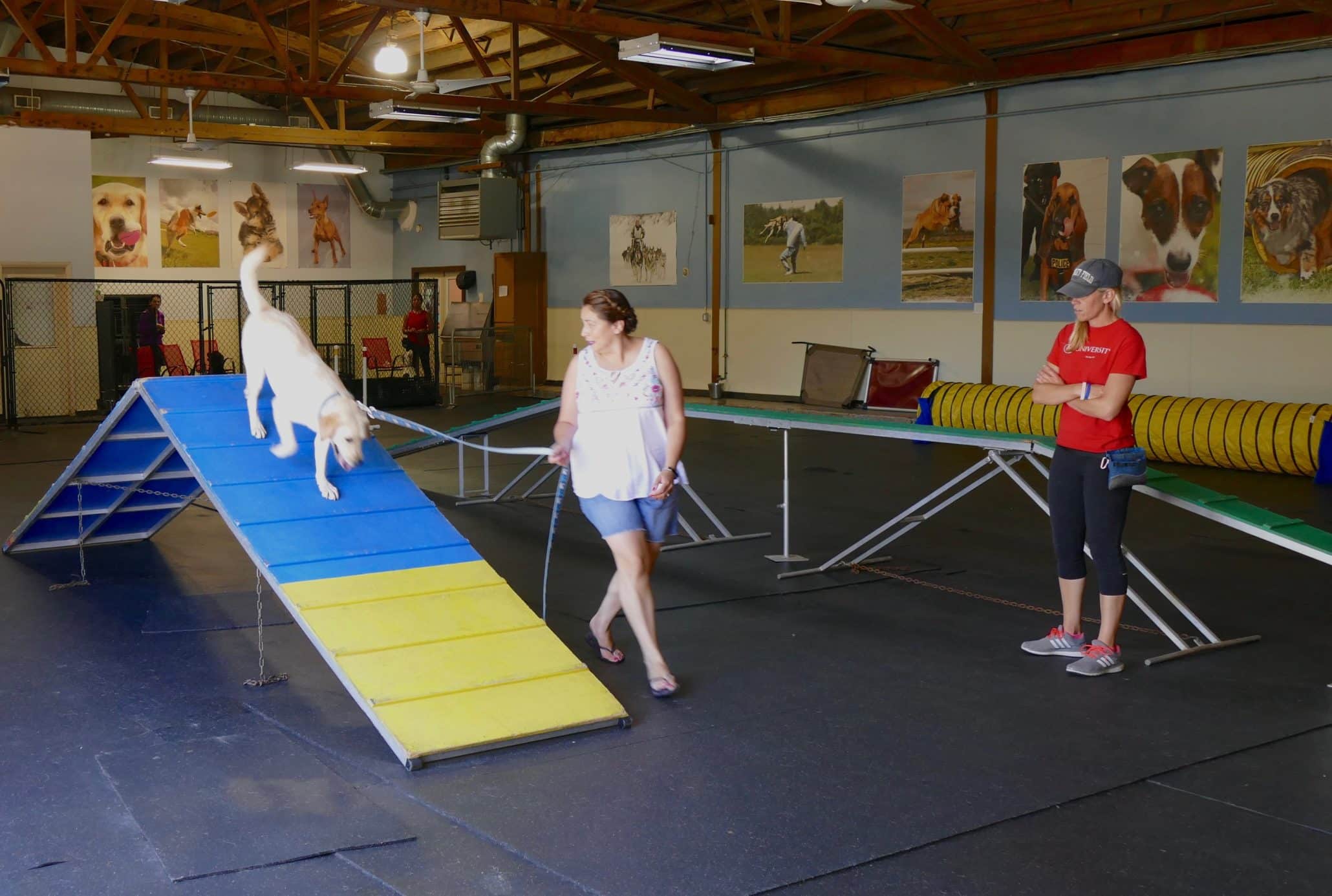
Joy is an Australian Shepherd. Before she started agility class, she destroyed things when her owner left the house. After she started, she did not. The destruction stopped, and Angie did not change anything else about the home routine. The only new variable was agility.
That kind of change shows up over and over again at K9 University Chicago. Owners come in looking for a way to burn off their high-drive dog’s energy, or a structured outlet for a reactive dog who cannot do a typical group class, or a sport to share with a dog who needs more than a daily walk. They leave with all of that, plus a different dog at home.
Below are four stories from agility owners at K9U Chicago. Each one is a different dog, a different owner, and a different reason for starting. Together they show what agility training does for a dog, and what it does for the relationship between dog and owner.
Lennon’s Story: How Agility Helped a Reactive Dog Build Trust
Lennon came to K9U through the social rehab class. Her owner, Kaleb, watched how the trainers worked with the dogs in that program before he signed her up for anything else. When he saw what she was capable of in a structured group, he enrolled her in agility.
The dog group social rehab class was the entry point because Lennon had work to do around other dogs. Reactive dogs often shut down or escalate in group settings, and the standard advice is to keep them out of those environments. K9U takes the opposite position: with the right structure, the right pace, and handlers who know what to look for, reactive dogs can do the work that builds trust. That is what dog group social rehab is built around.
Agility extended that work. In an agility class, every dog is in the same room, focused on the same task, working with their own handler. The dogs are not being asked to interact. They are being asked to ignore each other and pay attention to the obstacles and the person leading them. For a reactive dog, that structure is gold. It builds the experience of being around other dogs without the pressure of being expected to play with them.
After almost a year of class, Kaleb describes the change as trust. Trust in him, and trust in the other dogs in the room. That is the language he uses, and it tracks with what trainers see across reactive-dog cases: the dog stops bracing for what might happen and starts paying attention to what is happening.
Kaleb’s recommendation: agility is for any dog who is too smart for their own good and needs a job.
Joy’s Story: When Agility Solved the Problem at Home
Australian Shepherds are bred to work. Joy’s owner, Angie, ran with her, and it was not enough. The dog came home from runs and still had energy left to spend, and that energy went into destroying things when she was alone in the house.
This is one of the most common patterns trainers see. The owner does the right things. They walk the dog. They run with the dog. They throw the ball. The dog still chews the couch. The reason is that physical exercise alone does not address the part of the brain that needs a job. Working breeds were built to think and solve problems and respond to a handler. A run does not engage any of that. Agility does.
Within a few weeks of starting agility class, the destruction at home stopped. Angie did not change the food, the schedule or the crate setup. She added one weekly class and she practiced agility exercises with Joy on the regular basis at home. That was the variable that produced the result.
The other change Angie noticed: Joy became more responsive to her commands across the board, not just in class. The communication that agility builds, where the dog reads the handler’s body language and adjusts on the fly, carries into every other context. The dog who can follow a cue at the start of a tunnel can also follow a cue on a city sidewalk.
Angie’s word for what agility brought into Joy’s life, and into hers: joy.
Miles Jr’s Story: An Outlet for a Dog Who Cannot Do Groups
Miles Jr is a Boston Terrier who cannot be around other dogs. That ruled out social play in daycare, and the dog park. His owner, Courtney, had done agility with a previous Boston Terrier and knew how much it helped, so when Miles needed an energy outlet, she came to K9U for the same thing.
What works for Miles is dog group social rehab as an add-on activity during day care or boarding and agility group classes. During Agility group class, he works the agility course one-on-one with his owner Courtney, under trainer’s supervision. The group class format is built for dogs who need structured activity, even if they are not candidates for group settings, whether the reason is reactivity, social anxiety, or just being a dog who does better solo.
The result Courtney describes is energy out, focus in. Miles comes home tired, which solves the problem she came in trying to solve. The bonus is what she did not expect: his focus on her improved. When she calls his name, he looks at her. When she gives a command, he responds. The hours spent learning to read her cues on the agility course translated directly into the rest of their life together.
Her favorite moments are the ones where Miles is so fast that he completes an obstacle from her shouting its name, before she gets close. That is the agility relationship at work. The dog has internalized the cues so deeply that proximity stops mattering.
Vivienne’s Story: How a Friend’s Recommendation Started a New Hobby
Vivienne came to agility through a friend who was tired of hearing the stories. Her owner, Amelia, kept describing Vivienne running around the backyard and jumping off things, and the friend connected the dots: a dog who jumps off things in the yard wants something to jump off on purpose. She recommended agility at K9U.
What started as a way to channel Vivienne’s energy turned into a hobby they share. The tunnel and the A-frame are her favorite obstacles. The proud moments, Amelia points out, go both ways. She is proud of Vivienne when Vivienne nails a hard obstacle. She is also proud of herself when she leads Vivienne through a course properly. That mutual pride is one of the things agility owners describe most often. The wins are shared.
The carryover effect is the same one Angie saw with Joy. Vivienne is more focused on Amelia at home and on walks. The agility course taught her to look to her handler for the next move, and she does it everywhere now.
Amelia recommends agility to so many people that they ask her about it whenever she shows them the videos. Her summary: it is a great way to connect with a dog, wonderful exercise for both of you, and good for both of your minds.
Could Agility Training Be the Right Fit for Your Dog?
Four stories, four different reasons for starting. Reactivity. Destructive energy at home. A dog who cannot do social groups. A dog who jumped off things in the yard. The pattern across all of them is the same: agility solved a problem that other activities had not.
If any of those stories sound like your dog, agility classes at K9 University run on a beginner-through-competition track. Beginner classes cover foundation skills, obstacle introduction, and the basics of handler communication. Intermediate and advanced classes build sequencing and off-leash work. Dogs of any breed can participate, and most dogs benefit from the program regardless of their starting point.
For dogs who already have agility experience and want the next step, K9U also offers intermediate and advanced agility classes. For dogs who need structured activity but are not the right fit for group classes or for the busy owners, the agility as an add-on activity during daycare, boarding or as drop-in service, works well. And for owners interested in other specialty programs, K9 Nose Work is a sister sport that engages a dog’s mind without requiring the same physical intensity, ideal for anxious dogs or dogs with mobility considerations.
Frequently Asked Questions About Dog Agility Training
What age should a dog start agility training?
Foundation skills can begin as early as eight weeks. Things like targeting, body awareness, focus on the handler, and confidence on novel surfaces are appropriate for puppies and form the basis for everything that comes later. Full agility, with jumps at standard heights and weave poles at speed, waits until the dog is between twelve and eighteen months old to protect developing joints and growth plates. K9U’s puppy agility training program is built around the foundation phase, and trainers assess each dog individually before moving them into full obstacle work.
What is the difference between agility and obedience training?
Obedience training teaches a dog to respond to commands. Sit, down, stay, come, leash manners, and impulse control are the building blocks. Agility training builds on that foundation and adds athletic communication, where the dog reads the handler’s body language and moves through obstacles at speed. The two are complementary, not competing. Most agility programs require basic obedience as a prerequisite, because the dog needs to respond to cues before they can be sequenced through a course.
Is agility training good for reactive dogs?
Often, yes. The structure of an agility class, where every dog is focused on their own handler and their own task, can be a powerful environment for reactive dogs to build comfort around other dogs without the pressure of interaction. K9U has worked with many reactive dogs in agility, including dogs who started in dog group social rehab. The right entry point for a reactive dog is a free evaluation, where the trainer can assess what format will set the dog up for success.
How long does it take to see results from agility training?
Most owners see two kinds of results on different timelines. The energy and focus changes at home often show up within a few weeks of consistent class. The dog comes home tired, settles faster, and pays more attention to the handler in everyday situations. The technical agility skills, like reliable weave poles, fast contact obstacles, and clean sequencing, take months to build and continue developing as long as the team trains. Both timelines are normal, and both are valuable.
What breeds do best in agility training?
High-drive working and herding breeds are the dogs people picture when they think of agility, including Border Collies, Australian Shepherds, Belgian Malinois, and Shelties. Those dogs do thrive in the sport. They are not the only dogs who do. Boston Terriers, Pit Bulls, mixed breeds, Poodles, and many other breeds train in agility and benefit from the work. The right question is not what breed your dog is. It is whether your dog is healthy, motivated, and old enough to begin.
Do I need to compete to do agility, or can it be just for fun?
Agility is a sport, but most owners who train in agility never compete. They train for the relationship, the exercise, the mental stimulation, and the fun of it. K9U’s beginner and intermediate classes serve owners on both paths. If competition becomes a goal later, the foundation built in those classes carries directly into competition prep. If it never does, the dog still gets every benefit the sport offers.
Get Started With Agility at K9 University Chicago
Every agility student at K9U Chicago started where you are now: a dog who needed something more, an owner who wanted to give it to them, and a question about whether agility was the right fit. The free evaluation answers that question.
If your dog needs a job, an outlet, a way to channel reactivity, or a sport to share with you, request a free training evaluation at K9U Chicago to talk through what would work best for your dog.


 Free Training Evaluation