



Inside 6 Real Reactive Dog Transformations: What Really Happens at K9U Chicago

Most reactive dog articles tell you what to do, but they don’t show you what reactive dog transformation actually looks like day by day, week by week, with real dogs and real families in Chicago.
When Sarah first called K9 University Chicago about her German Shepherd mix, Duke, she was crying. “I can’t even walk him around the block without him lunging at every dog we see,” she said through tears. “I’m starting to think I’m a terrible dog owner.”
Six weeks later, Duke was calmly walking past other dogs in Lincoln Park, his tail wagging as he looked to Sarah for direction instead of fixating on his triggers. Sarah wasn’t crying anymore—she was smiling.
Like many Chicago families dealing with what they initially thought was ‘aggressive’ behavior, Sarah discovered that Duke wasn’t truly aggressive, he was reactive. Duke’s story isn’t unique at K9U Chicago. With over 29,000 square feet of specialized reactive dog facilities and years of experience with reactive dog transformation Chicago cases, we’ve witnessed hundreds of success stories. But what does that rehabilitation journey actually look like?
Many dogs brought to us were initially labeled as "aggressive" by their families or previous trainers. However, true aggression is rare, most concerning behaviors stem from fear, frustration, or overstimulation. Understanding this difference is crucial because reactive dogs respond beautifully to the right approach, while truly aggressive dogs require entirely different protocols. |
What Does Reactive Dog Transformation Look Like Week by Week

Chicago presents unique challenges for reactive dog behavior modification. Dense urban environments, small living spaces, mandatory leash laws, and constant stimulation create the perfect storm for reactive behaviors. Unlike suburban areas where dogs might have yards to decompress, Chicago dogs must navigate crowded sidewalks, apartment hallways, and busy dog parks daily.
Reactive behavior is increasingly common among urban dogs, with many Chicago families struggling to manage their dogs’ responses to city stimulation. The combination of limited space, frequent encounters with other dogs, and the stress of urban living can intensify reactive behaviors in dogs who might otherwise be manageable in quieter environments.
Traditional training approaches often fail because they don’t address the root causes of reactive behavior in urban environments. Group classes become overwhelming, one-hour weekly sessions aren’t enough exposure, and many facilities lack the specialized space needed for proper desensitization and counter-conditioning work.
That’s where K9U Chicago’s approach differs fundamentally.
Six Dogs, Six Reactive Dog Transformation Stories

Story 1: Max – The Leash Reactive Rescue
Background: Max, a 3-year-old Border Collie mix, was surrendered to a Chicago rescue after his previous owners couldn’t manage his explosive reactions to other dogs on leash. His new family was determined to help him succeed.
Week 1-2: Assessment and Separation
Max’s journey began with Daycare with individual activities in K9U’s separated reactive dog areas. Rather than throwing him into group play, our team focused on building his confidence through structured activities: treadmill work, agility exercises with A-frames and tunnels, and one-on-one fetch sessions.
“The key with leash reactive dogs is understanding that their aggression often stems from frustration,” explains our behavior assessment process. “Max wasn’t aggressive. He was desperate to interact with other dogs but didn’t know how to do it appropriately.”
Week 3-4: Controlled Exposures
Using K9U’s 11,000 square foot outdoor grassy yard, Max began controlled exposures to other dogs at distance. The facility’s size allowed for gradual desensitization, starting at 50 feet away from other dogs and slowly decreasing distance as Max remained calm.
Daily report cards during this period showed steady progress: “Max saw three dogs today from 30 feet away. Remained focused on trainer. Played fetch for 20 minutes afterward, exhausted and content!”
Week 5-6: Integration Success
By week six, Max was participating in carefully managed group activities with select calm dogs. His leash reactivity had decreased by approximately 80%. His family reported that neighborhood walks were now enjoyable rather than stressful.
The Breakthrough Moment: Week 4, when Max voluntarily turned away from another dog to focus on his handler, the first time he’d made that choice independently.
Story 2: Bella – From Fearful to Confident
Background: Bella, a 2-year-old rescue Pitbull mix, was terrified of everything: new people, sudden movements, car doors closing, and especially other dogs. Her anxiety was so severe she would shake during pickups.
Week 1-2: Building Basic Trust
Bella’s transformation required a completely different approach than Max’s. Instead of managing reactivity, we needed to build confidence from the ground up. She spent her first weeks in individual activities: gentle treadmill sessions, basic obedience work, and lots of positive reinforcement for calm behavior.
Week 3-4: Gradual Socialization
K9U’s separate entrance and exit system (specifically designed for reactive dogs) meant Bella could arrive and leave without overwhelming encounters. Slowly, she began interacting with our calmest facility dogs through fence barriers — close enough to build interest, far enough to maintain comfort.
Her daily reports during this period were encouraging: “Bella played with rope toy for 15 minutes today! Big improvement in confidence. Still nervous with sudden noises but recovering faster.”
Week 5-8: Breakthrough and Integration
Bella’s transformation took slightly longer than Max’s, fearful dogs often need more time than frustrated ones. But by week eight, she was greeting other dogs politely and even initiating play with smaller, gentle dogs.
The Breakthrough Moment: Week 6, when Bella approached another dog on her own rather than hiding behind her handler, a moment that brought tears to her owner’s eyes.
Story 3: Duke – The Multi-Dog Household Challenge
Background: Duke, the German Shepherd mix from our opening story, lived with two other dogs but was reactive only to dogs outside his household. This made walks impossible and limited the entire family’s outdoor activities.
Week 1-2: Understanding Territorial Behavior
Duke’s reactivity was rooted in territorial protection rather than fear or frustration. Our assessment revealed he was trying to “protect” his family from perceived threats. The solution required teaching him that other dogs weren’t threats to his pack.
Week 3-4: Impulse Control and Redirection
Using K9U’s spacious indoor areas, Duke learned impulse control exercises. Instead of lunging at other dogs, he learned to “look for treats” in the grass, perform “watch me” commands, and even jump onto benches when feeling overwhelmed—all alternative behaviors that earned rewards.
Week 5-6: Real-World Application
Duke’s training transitioned to controlled outdoor scenarios. Using the facility’s multiple separated areas, he practiced walking calmly past other dogs at varying distances. His progress was documented daily: “Duke walked within 15 feet of three different dogs today. Only one minor reaction, quickly redirected. Excellent recovery!”
The Breakthrough Moment: Week 5, when Duke automatically sat and looked at his handler when he saw another dog approaching—without being asked.
Story 4: Luna – Puppy Reactivity Prevention
Background: Luna, a 4-month-old Golden Retriever puppy, wasn’t fully reactive yet, but her owners noticed concerning signs: over-excitement around other dogs, difficulty calming down after stimulation, and increasingly pushy behavior during greetings.
Month 1: Early Intervention
Luna’s case demonstrates the power of early intervention. Rather than waiting for full reactivity to develop, her family enrolled her in K9U’s specialized puppy socialization program within our reactive dog framework.
Month 2: Structured Socialization
Unlike typical puppy classes that can be overwhelming, Luna’s socialization was carefully managed. She interacted with specifically chosen adult dogs known for appropriate puppy corrections, learned to read dog body language, and practiced calm greetings through our specialized training programs.
Her progress reports were consistently positive: “Luna played appropriately with adult dog today. Learned to respect ‘go away’ signals. Napped afterward—perfect tired puppy!”
Month 3: Confident Graduate
By three months, Luna had developed excellent social skills and impulse control. Her owners report that she’s now 18 months old and shows no signs of reactivity. This is a success story in prevention rather than rehabilitation.
The Breakthrough Moment: Month 2, when Luna voluntarily walked away from an overstimulating play session to rest, showing she’d learned self-regulation.
Story 5: Charlie – The Senior Reactive Rescue
Background: Charlie, an 8-year-old Beagle mix, developed reactivity later in life after a traumatic attack by another dog. His family worried he was “too old to change.”
Week 1-3: Adapted Approach for Senior Dogs
Charlie’s age required modifications to our typical protocol. Physical activities were gentler, more walking, less running. Mental stimulation became crucial: puzzle toys, scent work, and calm social interactions with well-matched dogs.
Week 4-6: Slow but Steady Progress
Senior dogs often progress more slowly but can be incredibly resilient. Charlie’s breakthrough came through scent work, focusing on tracking games helped him ignore other dogs naturally. His reactivity decreased as his confidence in other activities increased.
Week 7-10: Proof That Age Is Just a Number
Charlie’s transformation took longer than younger dogs, but it was just as dramatic. His family reports that their 8-year-old dog now enjoys calm walks and has even made a few dog friends at the local park.
The Breakthrough Moment: Week 8, when Charlie chose to sniff the ground near another dog rather than react, showing he’d learned alternative coping strategies.
Story 6: Storm – The “Impossible” Case
Background: Storm, a 5-year-old Husky mix, had been through three previous trainers without success. His reactivity was severe: lunging, snapping, and showing signs of resource guarding around other dogs. His family considered this their last attempt before exploring rehoming options.
Week 1-2: Complete Reset
Storm required our most intensive approach. He spent two weeks in individual activities only; no group interactions, no visual contact with other dogs during arrival/departure, complete focus on building a relationship with humans first through our day training program.
Week 3-4: Multi-Modal Approach
Storm’s case required combining multiple methodologies: counter-conditioning (changing his emotional response to other dogs), impulse control exercises, and extensive mental stimulation to tire his overactive mind. For cases like Storm’s, K9U’s boarding and training program provides the intensive, round-the-clock focus that severe reactivity often requires.
Week 5-8: Breakthrough Through Persistence
Storm’s progress wasn’t linear. He had setbacks in weeks 6 and 7, but the consistency of K9U’s approach meant he always had a safe space to decompress and try again. By week 8, he was showing significant improvement.
Week 9-12: The Long Game Pays Off
Storm’s transformation took three months—longer than most dogs but proof that even severe cases can improve with the right approach and enough time. His family now describes walks as “manageable” rather than “terrifying.”
The Breakthrough Moment: Week 10, when Storm played appropriately with another dog for the first time in over two years.
The Science Behind K9U’s Reactive Dog Success Rate
Facility Design Matters
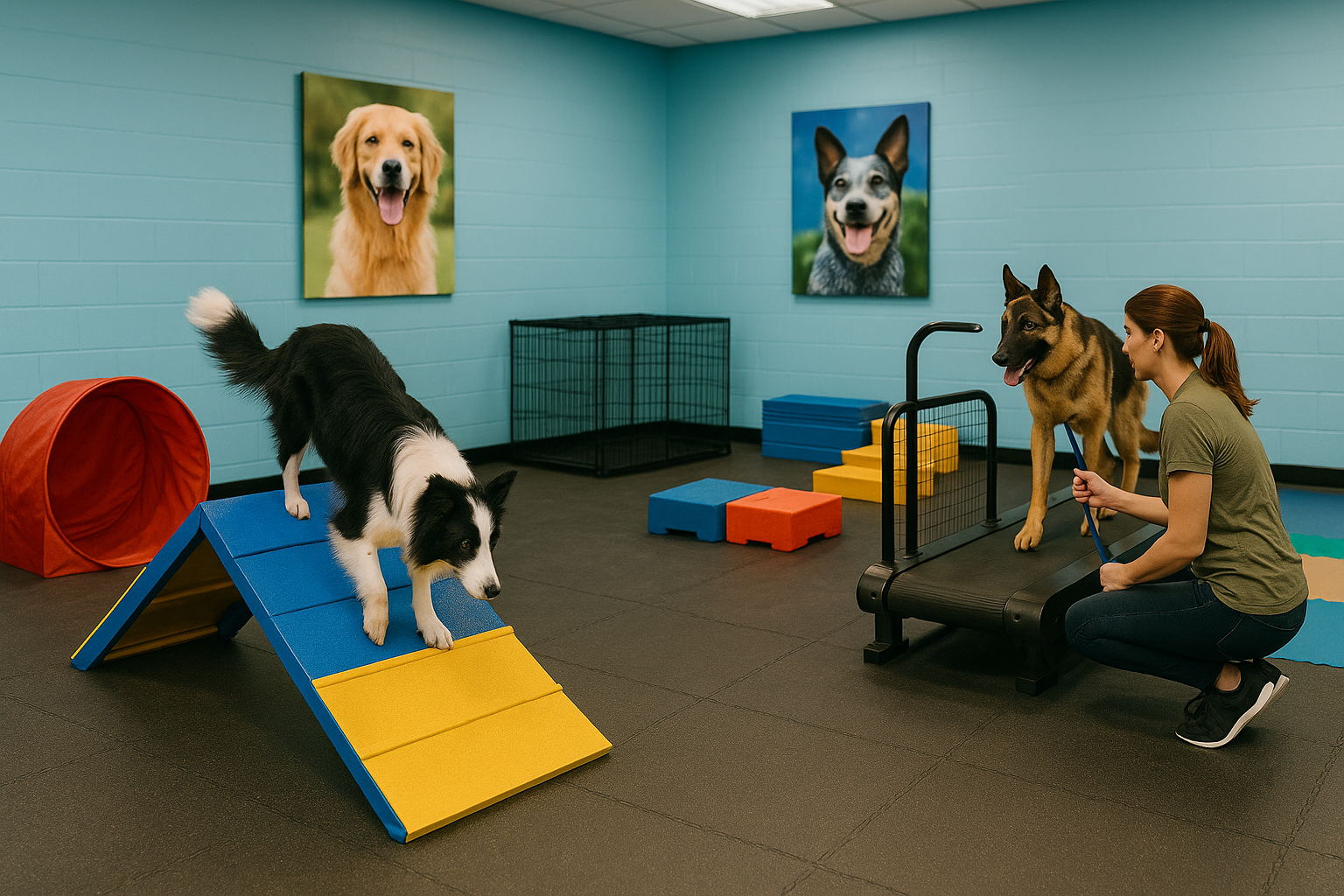
K9U Chicago’s 29,000 square feet of indoor and outdoor space isn’t just impressive. It’s functionally critical for reactive dog success. Our specialized features include:
- Separate reactive dog entrance/exit: Prevents overwhelming arrivals and departures
- Multiple isolated play areas: Allows for gradual desensitization at appropriate distances
- 11,000 square foot outdoor grassy yard: Provides space for long-distance exposures
- Climate-controlled indoor areas: Ensures year-round training consistency in Chicago’s harsh weather
How Individual Activities Help Reactive Dogs in Chicago Daycare
While many facilities focus solely on group interactions, K9U’s individual activity program addresses the root causes of reactivity:
- Treadmill exercises: Provide physical outlet without social pressure
- Agility work: Builds confidence and focus
- Scent work and puzzle toys: Tire the mind, reducing anxiety
- One-on-one attention: Builds human-dog bond crucial for training success
Consistency Creates Results
Reactive dog transformation requires consistency that once-weekly training sessions can’t provide. K9U’s daycare model means dogs practice appropriate behaviors daily, not just during training sessions through our leash reactive dog daycare Chicago approach.
The Report Card Advantage
Daily photo and video updates serve multiple purposes:
- Owner peace of mind: Reduces anxiety about leaving reactive dogs
- Progress documentation: Allows families to see gradual improvements
- Celebration of small wins: Maintains motivation during challenging periods
Real Reactive Dog Success Stories Timeline Expectations

Based on hundreds of reactive dog transformation cases in Chicago, here are realistic rehabilitation timelines:
- Mild Reactivity (excited but manageable): 3-6 weeks Moderate Reactivity (lunging, barking, but redirectable): 6-10 weeks
- Severe Reactivity (aggressive displays, difficult to redirect): 10-16 weeks Complex Cases (multiple triggers, previous training failures): 3-6 months
Important note: “Reactive dog transformation” doesn’t mean “cured.” Reactive dogs learn management strategies and coping skills through consistent behavior modification. Most will always need ongoing support and may have occasional setbacks during stressful periods.
The Owner’s Emotional Journey
Week 1-2: Hope Mixed with Skepticism
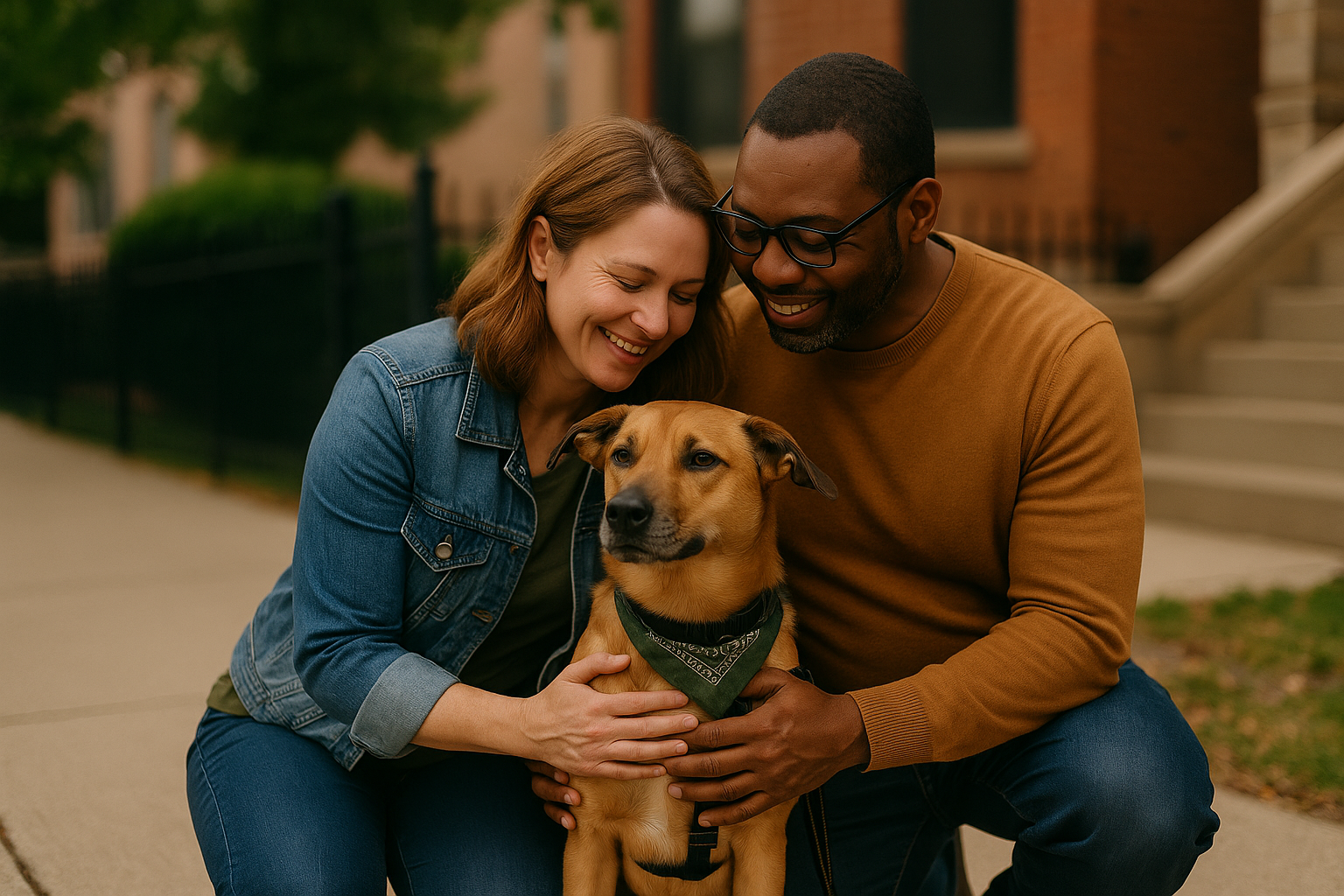
Most families arrive feeling defeated. They’ve often tried multiple solutions and worry this won’t work either. Common feelings include:
- Guilt about their dog’s behavior
- Embarrassment during public outings
- Doubt about their capabilities as dog owners
Week 3-4: Cautious Optimism
As small improvements appear, hope begins to build. Families report:
- Less stressful pickup/drop-off experiences
- Positive feedback in daily reports
- Slight improvements during home walks
Week 5-8: Breakthrough Period
Most major breakthroughs occur during this window. Families experience:
- Dramatic improvements in home behavior
- Successful public outings
- Renewed confidence in their dog-handling abilities
Week 9+: Long-term Success
Families learn to maintain progress and handle occasional setbacks:
- Understanding that reactivity requires lifelong management
- Confidence in their ability to help their dog
- Joy in activities that were previously impossible
What This Means for Your Reactive Dog
Is Your Dog a Candidate?
K9U Chicago’s reactive dog program works best for dogs showing:
- Fear-based reactivity rather than true aggression (many dogs labeled ‘aggressive’ are actually reactive)
- Some level of human bonding and trust
- Physical health good enough for daily activities
Not sure if your dog fits these criteria? Download our FREE Comprehensive Dog Evaluation Checklist to assess your dog’s specific needs and determine the best approach for their behavioral challenges.
Download Dog Evaluation Checklist
Setting Realistic Expectations
Success looks different for every dog:
- Mild cases: May achieve near-normal social behavior
- Moderate cases: Learn reliable management strategies
- Severe cases: Develop coping skills and reduced intensity reactions
The Investment Equation
Reactive dog rehabilitation requires:
- Time commitment: Daily training/daycare for best results
- Financial investment: Specialized care costs more than basic daycare
- Emotional commitment: Supporting your dog through setbacks
- Lifestyle adjustments: Ongoing management strategies
Chicago-Specific Considerations
Why Reactive Dogs Need Specialized Chicago Urban Training
Chicago’s density creates unique reactive dog challenges:
- Constant stimulation from city sounds and sights
- Mandatory leash laws limiting natural dog interactions
- Small living spaces providing little decompression time
- High dog population increasing encounter frequency
Breed Restrictions and Insurance
Many Chicago apartments have breed restrictions affecting reactive dogs. K9U works with families to support families navigating housing challenges through our comprehensive care approach
Weather Considerations
Chicago’s extreme weather affects reactive dog training:
- Winter ice and snow limit outdoor socialization
- Summer heat requires adjusted activity schedules
- K9U’s climate-controlled facilities ensure year-round consistency
Your Next Steps
1. Schedule a Free Evaluation
Every reactive dog journey begins with understanding your specific situation. K9U’s evaluation includes:
- Behavior assessment by experienced staff
- Facility tour showing specialized reactive dog areas
- Customized training plan discussion
- Timeline and expectation setting
Prepare for your visit: Download our FREE Dog Evaluation Checklist to document your dog’s behaviors and triggers before your appointment.
Contact us today schedule your dog’s assessment.
2. Consider Your Commitment Level
Successful reactive dog rehabilitation requires:
- Daily training/daycare: Most effective for severe cases – see our daycare pricing
- Intensive boarding and training: For severe cases needing round-the-clock focus – explore our boarding and training program
- Multiple times per week: Good for moderate cases
- Weekly sessions: May work for mild cases with at-home reinforcement
3. Prepare for the Journey
- Gather medical records: Rule out underlying health issues
- Document current triggers: Help trainers understand your dog’s specific needs
- Prepare emotionally: Transformation takes time and patience
- Plan financially: Specialized training is an investment in your dog’s future – review our pricing options
Hope for Chicago’s Reactive Dogs
Max, Bella, Duke, Luna, Charlie, and Storm represent hundreds of reactive dog transformation Chicago success stories at K9U. Each dog’s rehabilitation journey was unique, but they share common elements: specialized facilities, consistent training, patient families, and expert guidance.
Reactive behavior doesn’t make your dog “bad” or unfixable. With the right approach, environment, and support, most reactive dogs can learn to navigate Chicago’s urban environment successfully.
Your dog’s reactive dog transformation story is waiting to be written. The first chapter begins with a phone call.
Ready to start your dog’s reactive dog transformation journey? Contact K9 University Chicago today for a free reactive dog evaluation. Our specialized 29,000 square foot facility and experienced team are ready to help your dog succeed in Chicago’s urban environment.


 Free Training Evaluation