



Levon’s Story: How a Reactive Rescue Pit Bull Found His Calm
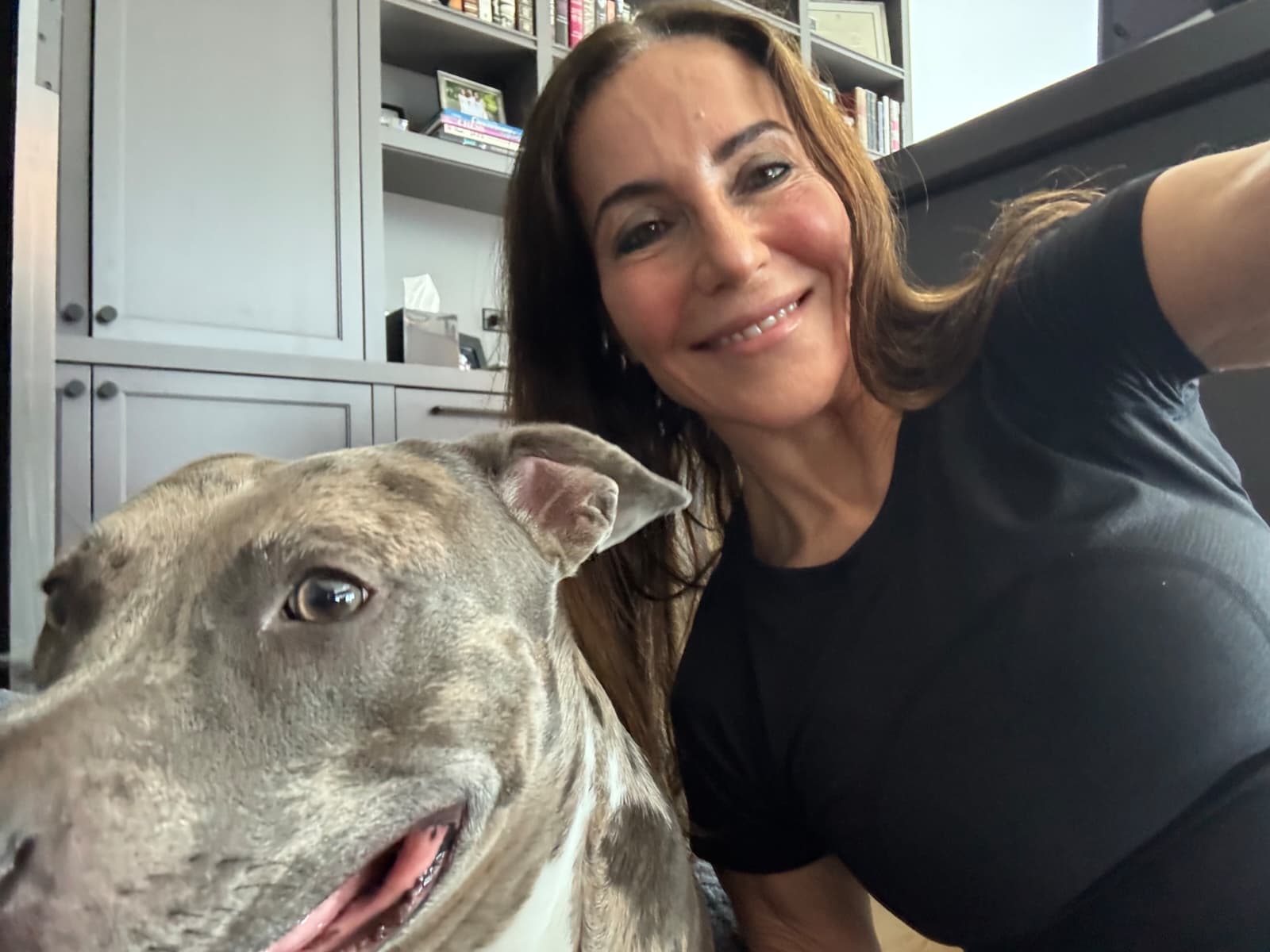
A three-legged rescue who bit guests and got expelled from daycare, and the patient, positive-reinforcement work that changed his life.
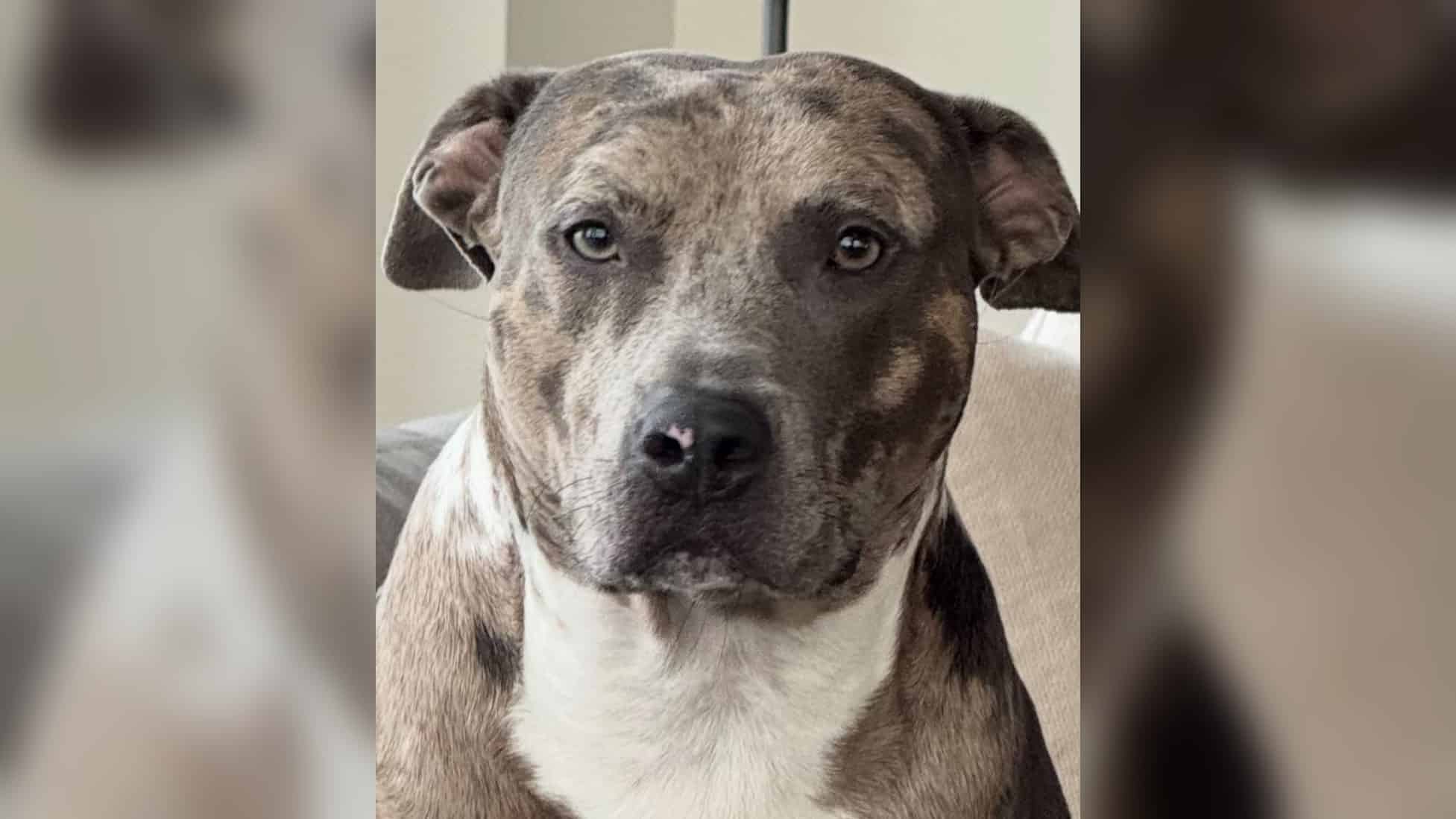
Levon was rescued off the streets of Chicago by police, severely underweight, with a leg that had broken, healed wrong, and atrophied. By the time PAWS Chicago had amputated and Elly and Jeff brought him home, he was two weeks into a new life he did not yet understand. Within days, the couple learned what fear can do to a frightened dog: their first dinner party turned into a night of vicious growling, barking, and lunging, and Levon bit more than one guest. He reacted that way to anyone who came through the door.
This is the story of how that dog became one Elly and Jeff can have guests over for, ride a high-rise elevator with, and take for walks. It is also a story about what reactive-dog rehabilitation truly takes, and why the most important work did not happen at the facility at all. Watch Levon’s story in the clips throughout this post, and read more reactive dog transformations from K9 University Chicago.
From Chicago Streets to a Chicago River North High-Rise
Levon’s early life left marks that went deeper than his missing leg. He had survived on the street long enough for a previous injury to cripple him, and he arrived in his new home out of sorts and on guard. The dinner-party disaster was not a one-time event. Elly and Jeff soon realized Levon treated every visitor as a threat, and there was no settling him once he spiraled.
Before K9U, the couple tried a doggy daycare, and for a while it seemed to work. Levon was fine hanging around with the pack, until one day he was not. While Elly and Jeff were on vacation, Elly watched the daycare camera and could not find Levon in the group. He had been kept separate because he was biting the other dogs. He was kicked out of that daycare for unprovoked lunging and never allowed back. Now the couple had a traumatized, reactive dog and nowhere for him to go. That is when they found K9U.
If your dog has been turned away from a daycare or labeled too difficult to handle, that is not the end of the road. K9U is one of the only facilities in Chicago that welcomes reactive dogs into structured daycare, boarding, and training, and starts every dog with a free evaluation.
Why the Owners Walked Away From Shock Collars
Before they found K9U, Elly and Jeff hired a trainer who wanted to use a shock collar. They were not comfortable with it. PAWS Chicago and the people they trusted advocated for positive reinforcement, not punishment, and the couple’s instinct told them the same thing: a frightened rescue does not need more fear. They wanted Levon to do things for the right reasons, because he trusted them, not because he was afraid of the consequences.
That conviction led them to K9U, where every trainer focuses on positive reinforcement training. Someone mentioned the facility to them, and Lead Trainer Jonathan Polich came to their home to meet Levon. That decision, to choose reward over punishment, is the one Elly says she would pass on to any owner of a struggling rescue.
The In-Home Evaluation That Came First
Jonathan did not bring Levon into the facility first. He started with an in-home evaluation, because Levon’s reactions were tied to his environment: a stimulating River North high-rise with constant foot traffic from doormen, custodians, workers, and neighbors moving in and out. To understand the dog, Jonathan needed to see him in his day-to-day world.
Levon was highly reactive the entire time, barking and vocalizing at a stranger he had never met. Jonathan had Elly walk him, created space whenever Levon started to react, and used food to show he was not a threat. Levon is highly food-motivated, which gave the work traction. What Jonathan saw was a dog who had never learned to socialize or to handle his own insecurity. Reading that behavior in Levon’s own environment was step one. From there came a trial day at K9U, then an extensive board and train stay of several weeks.
Building Trust After a Rocky First Day
The first day did not go smoothly. After Jeff dropped Levon off, Jonathan took him to his kennel, removed the leash, and reached to open the gate. Levon, still not knowing what to do, lunged and bit Jonathan’s kneecap. Jonathan calls it a welcoming party. He went back out, talked it through with Jeff, and they pressed on. The rest of the day was desensitization and trust-building, and by evening Levon had come far enough that the extended stay made sense.
Trust did not come from Jonathan alone. K9U’s team-based approach mattered, especially because Levon showed more fear around men than women. Regular staff played with him, fed him, and gave him the exposure he needed. The facility’s space helped: a large outdoor training yard let Levon work off leash with room to breathe instead of feeling confined. His personality, playful, food-driven, and full of character, started to come out, and once the staff saw it, the corner turned quickly.
Why the Work at Home Decided Everything
The board and train was not where Levon’s success was decided. Jonathan is direct about this: the transition home was the massive step. No facility can fully mimic a downtown high-rise full of doormen and strangers, so the real test was whether the tools would hold in Levon’s day-to-day life. Success meant Elly and Jeff staying consistent, using what Jonathan showed them in the stressful moments, and rewarding Levon for better decisions along the way.
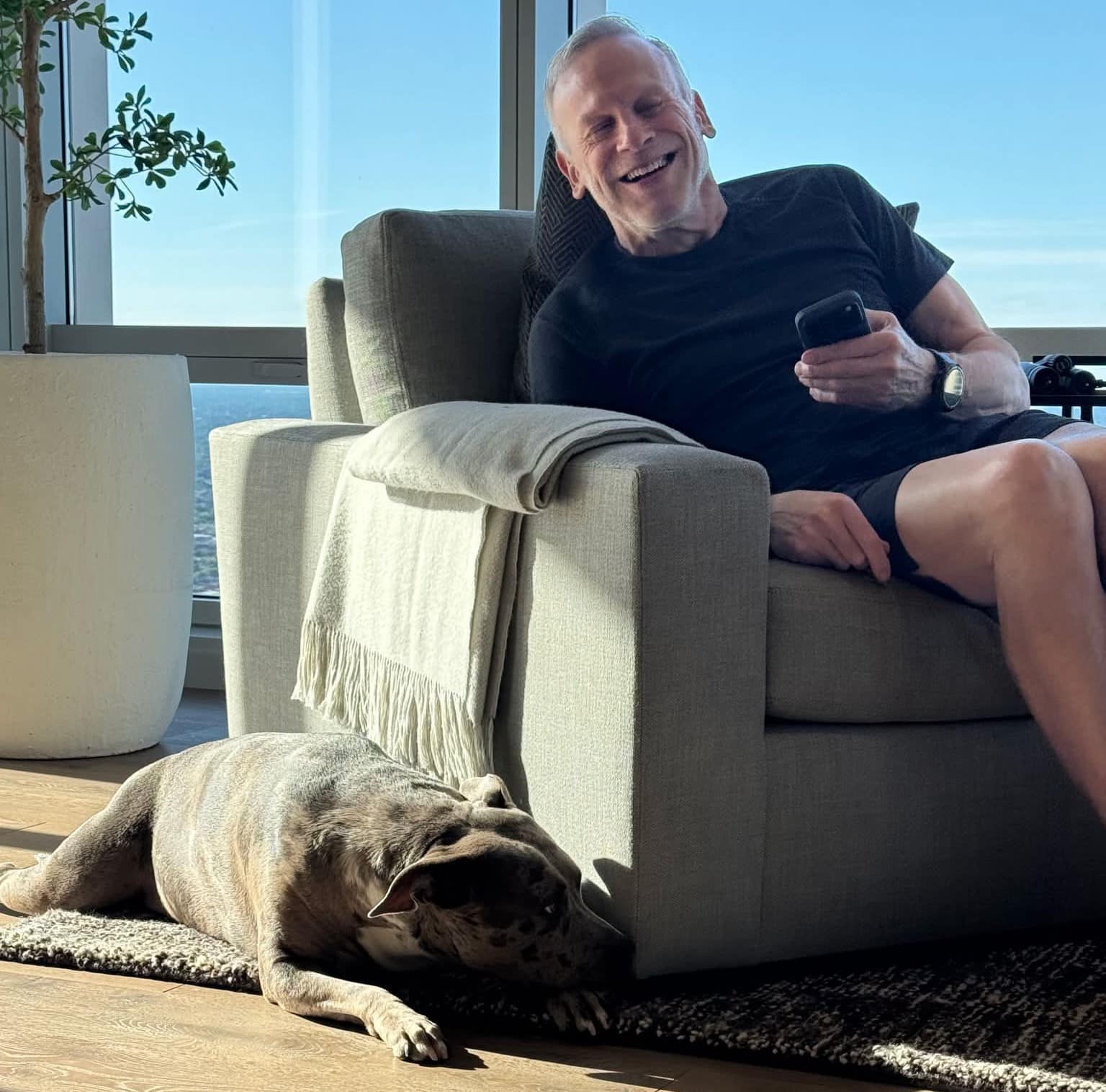
It worked. When Jonathan returned for a follow-up at the home, he could see Levon thinking instead of reacting. The dog who used to see red and lash out was now processing, making better choices, and learning to let things go. Today, Levon waits in a calm space until guests settle, then comes out on leash to take treats from them. Elly and Jeff can have people over. They can ride the elevator. Levon runs on the grass at K9U, where the long-term goal is to ease him into the wider daycare group when he is ready. In Elly’s words, he is the sweetest, biggest cuddler, a dog they are madly in love with. Jonathan calls him one of the more special dogs he has ever worked with, a forever dog with a permanent place in his heart.
Elly’s advice to other owners is simple. Choose positive reinforcement. Avoid shock collars and any form of negative treatment, especially for a rescue. And know that reactive dogs, pit bulls included, can be rehabilitated when the work is done through patience and love. If you would like to know more about K9U’s approach and team, meet the people behind it.
Reactive Dog Success Story FAQs
Can a dog kicked out of daycare be rehabilitated?
Yes, in many cases. A dog removed from daycare for lunging or biting is usually reacting out of fear or social insecurity, not malice. The path back starts with a proper evaluation to understand what triggers the behavior, followed by structured desensitization, impulse-control work, and gradual, positive exposure at a distance the dog can handle. Levon was expelled from a daycare for unprovoked lunging and, after an in-home evaluation and a multi-week board and train built on positive reinforcement, became a dog his owners can host guests and ride elevators with. The key is a facility that evaluates carefully and never forces a dog into a situation it is not ready for.
Do shock collars work for reactive dogs?
Shock collars and other punishment-based tools can suppress the outward signs of reactivity, but they do not address the fear or anxiety underneath, and they often make a frightened dog more anxious over time. For a traumatized rescue, adding fear tends to backfire. Positive reinforcement works differently: it rewards calm, neutral behavior and teaches the dog what to do instead of reacting, building genuine confidence rather than masking the problem. Levon’s owners refused a shock collar and chose reward-based training, which is the approach K9U uses with every dog.
What is fear-based aggression in dogs?
Fear-based aggression is reactive behavior, such as growling, lunging, barking, or biting, that is driven by fear rather than dominance or meanness. A dog who feels threatened and sees no other option may lash out to create distance. The treatment is not punishment, which raises arousal, but management and counter-conditioning: reducing what scares the dog, teaching alternative behaviors like settling on a mat, and rewarding calmer responses. Levon’s reactivity stemmed from social insecurity and a stimulating environment, and the work focused on showing him what to do when he started to feel afraid.
Can three-legged or rescue dogs do board and train?
Yes. A missing limb or a difficult history does not rule a dog out of board and train; it simply means the program must be tailored to the individual. Levon is a tripod amputee and a street rescue with a bite history, and his program began with an in-home evaluation, moved to a trial day, and then to an extensive stay with built-in trust-building before any intensive work began. A good board and train adjusts pace, activity, and handling to the dog in front of it, rather than applying one formula to every case.


 Free Training Evaluation