



The 3-3-3 Rule for New Dogs: What to Expect and How K9U Helps

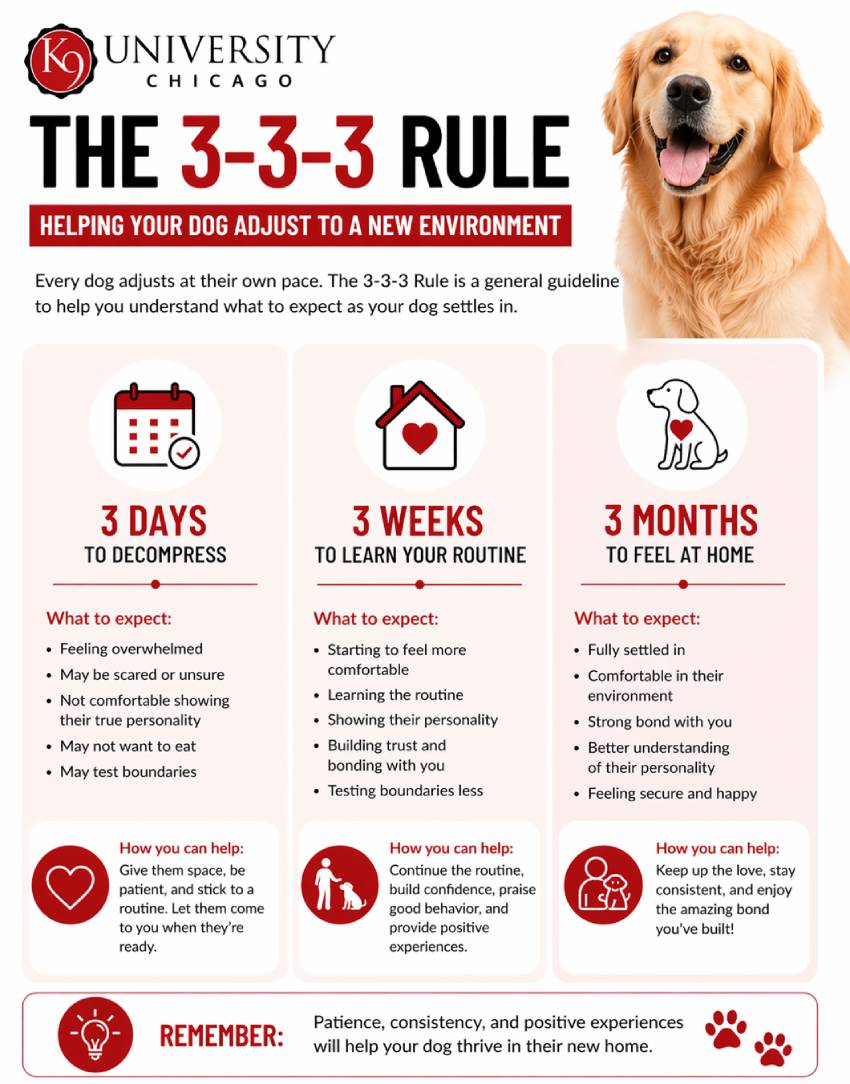
The 3-3-3 rule for new dogs helps explain their transition into three stages: the first 3 days, 3 weeks, and 3 months, and helps you understand what your dog is experiencing and how to support them as they settle in.
Bringing a new dog home is one of the most exciting things you can do. It’s also one of the most uncertain. Many owners expect their dog to settle in within a few days, but the reality is that adjustment takes time, and it doesn’t always look the way people expect. At K9U Chicago, we’ve been working with dogs since 1992, and we see the 3-3-3 rule play out in real time: anxious arrivals who hide in corners during their first daycare session, and those same dogs bounding in confidently three months later.
What Is the 3-3-3 Rule for Dogs?
The 3-3-3 rule explains how dogs adjust to a new home:
- In the first 3 days, most dogs feel overwhelmed and unsure.
- In the first 3 weeks, they begin to settle in, learn your routine, and engage more with their environment.
- By 3 months, many dogs feel more secure. Their personality becomes clearer, their confidence improves, and your bond feels more natural.
It’s not a strict timeline; some dogs adjust faster than others. It simply helps you understand that adjustment happens in stages, and behavior may change as your dog becomes more comfortable.
Why the 3-3-3 Rule Matters
One of the biggest challenges for new dog owners is not knowing what’s normal.
When a dog seems anxious or behaves differently than expected, it’s easy to assume something is wrong. In most cases, your dog is simply responding to a new environment.
Everything has changed: new smells, sounds, people, and routines. Even confident dogs can feel uncertain at first, and that early anxiety is normal. It’s common for behavior to shift over time as dogs become more comfortable.
Without this understanding, it’s easy to do too much too soon, which can overwhelm your dog and slow down their adjustment.
The 3-3-3 rule helps shift that approach by encouraging patience, consistency, and a stable environment.
The First 3 Days: Focus on Safety and Decompression
The first few days are about helping your dog feel safe.
Your dog is still taking everything in. You may notice they are quiet, hesitant, or withdrawn. Some dogs will hide or avoid interaction, while others may seem calm, but that calmness is often a sign they’re overwhelmed. This isn’t their full personality, just a response to a new situation. During this time, keep things simple. A calm, quiet environment helps your dog settle more easily. Try not to introduce too many new people, pets, or experiences right away.
One of the most helpful things you can do is let your dog approach you on their own terms. Instead of trying to build a connection immediately, give them space to explore and get comfortable. When a dog chooses to come to you, it means more and helps build a stronger foundation.
At K9U, we often see new dogs in their first daycare visit look completely frozen. Our team knows not to force interaction; we let them move at their own pace, and almost every time, curiosity wins out within an hour.
The First 3 Weeks: Building Routine and Trust
As your dog becomes more familiar with their surroundings, you’ll start to see changes.
They may explore more, show curiosity, and engage with you more often as their confidence grows. At the same time, you may notice behaviors that weren’t visible in the first few days. Some dogs will test boundaries, while others may show signs of excitement or reactivity.
Your dog is no longer just observing; they’re starting to settle in and understand their new environment. This is where consistency becomes important. Regular feeding times, walks, and routines help your dog know what to expect and feel more secure.
You can also begin introducing simple training. Keep it short, positive, and low-pressure. The goal isn’t perfection; it’s building confidence. New environments and experiences should be introduced gradually, at a pace your dog can handle.
This is also a great time to consider structured daycare. At K9U, we see dogs in their second and third weeks begin to blossom in a social environment. Supervised play with other dogs builds confidence faster than almost anything else.
The First 3 Months: Confidence and Connection
By the three-month mark, most dogs are much more comfortable in their new home.
Their personality becomes clearer as they settle into their routine and adapt to their environment. This is when they start to feel more secure, and your bond becomes more natural.
At this stage, you’ll likely see more confidence and engagement. Your dog is no longer just adjusting; they’re starting to feel at home. That said, the process doesn’t stop here. Some behaviors may still need guidance, and ongoing training plays an important role.
Continuing to reinforce positive behavior, maintaining consistency, and gradually introducing new experiences will help your dog build more confidence over time.
At K9U, we often tell owners: the dog you have at three months is much closer to the dog you’ll have forever. That’s who you’re training, and that changes everything about how they learn.
Common Challenges During the Adjustment Period
It’s normal for dogs to experience challenges as they settle into a new home. Here are the most common ones and what to do:
Separation Anxiety
Whining, barking, or destructive behavior often appears in weeks 2–3 when your dog starts to bond with you and then experiences being left alone. Short departures and a consistent routine help most dogs work through this.
House Training Regression
Even previously trained dogs may have accidents in a new environment, as they don’t yet understand the geography or your cues. Consistent potty breaks resolve this for most dogs within a few weeks.
Leash Reactivity
This is pretty common when a dog is in a new place. You’ll see it on walks or even just by walking through the door. Suddenly, they’re barking at dogs or people they would’ve ignored before.
A lot of the time, it’s just them trying to figure things out. For example, you might notice it right when another dog gets a little too close on leash or when someone approaches head-on. Give them a bit more space in those moments, keep things moving, and don’t make a big deal out of it.
As they settle in, it usually fades. If it doesn’t, that’s when you want to get more structured about it.
Resource Guarding
This is something you’ll often start to notice once a dog really settles in. They might get a bit tense over their food, hang onto a toy, or claim a certain spot like it’s theirs.
Don’t wait for it to turn into a bigger issue. Step in early, keep things consistent, and show them what’s okay. Reward the calm, relaxed behavior you want to see. Most dogs figure it out pretty quickly when you handle it that way.
How to Help Your Dog Adjust Successfully
Helping your dog adjust comes down to a few consistent habits.
Give your dog time and space, especially in the beginning. Let them approach you rather than forcing interaction. This helps build trust and reduces stress.
Keep routines consistent. Feeding, walks, etc., should happen at predictable times each day and help your dog feel more secure.
Try not to overwhelm your dog with too many new experiences too quickly. Gradual exposure is more effective and leads to better results.
Positive reinforcement also plays an important role. Encouraging calm, confident behavior through small, consistent actions can make a real difference over time.
When to Seek Extra Support
Some dogs need additional support as they adjust, and that’s completely normal.
If your dog’s anxiety isn’t improving, or certain behaviors feel difficult to manage, getting guidance early can make a real difference. Dogs don’t always grow out of stress or reactivity on their own. Many benefit from structure, consistency, and the right environment.
Working with experienced professionals can help you understand what your dog is going through and how to respond in ways that build confidence over time.
At K9U Chicago, we’ve been working with dogs since 1992, and we’re one of the only facilities in Chicago that truly welcomes all dogs, including those who are anxious, reactive, or need extra support. Our daycare, training, and Board & Train programs are built around dogs and giving them the structure they need to build confidence over time.
How This Applies to Daycare and Boarding at K9U
The 3-3-3 rule doesn’t stop at your front door. The same adjustment process applies when your dog encounters any new environment, including daycare and boarding.
This is why we always recommend starting with a few daycare visits before booking an overnight stay. It gives your dog a chance to get familiar with our space, our team, and the rhythm of the day without the added pressure of spending the night in a new environment. For a dog that is still settling into a new home or routine, going straight into boarding can be a lot to handle.
In our experience, dogs who are introduced gradually do better across the board. They settle in faster, feel more at ease with the team, and come back with their tails up. The ones who are thrown in at the deep end often take much longer to find their footing, and some never quite get comfortable.
We are not just trying to get your dog through the day. We want them to enjoy being here.
Supporting Your Dog Through Every Stage
Adjusting to a new home takes time, and every dog moves at their own pace.
The 3-3-3 rule provides a helpful framework, but what matters most is how you support your dog. Creating a calm environment, maintaining consistent routines, and allowing your dog to build trust naturally all play an important role. For dogs who are more anxious, reactive, or unsure, having the right support can make that transition much smoother.
K9U Chicago accepts all kinds of dogs, including those who need extra support. Through our daycare and training, dogs are given the structure they need to build confidence over time.
If you’re in the early weeks with a new dog and feeling uncertain about what you’re seeing, reach out. We’re happy to talk through what’s normal and help you figure out whether daycare, training, or another program is the right next step for your dog.
Common Questions About the 3-3-3 Rule
1. How Long Does the 3-3-3 Rule Take?
The 3-3-3 rule suggests that dogs start to settle in within the first few weeks, but it can take around three months for them to feel 100% comfortable. Every dog is different, so some may adjust faster while others need a bit more time.
2. Does the 3-3-3 Rule Apply to Every Dog?
Not exactly. The 3-3-3 rule is a helpful guide, but not every dog will follow that timeline. Some settle in quickly, while others take longer. It’s best used to understand the general stages of adjustment, rather than something fixed.
3. Why Does My Dog Seem Calm at First, Then Suddenly Act Out?
This is normal. In the first few days, many dogs feel overwhelmed and may seem quiet. As they become more comfortable, their true personality and behaviors start to show.
4. Should I Start Training My New Dog Right Away?
For the first few days, stick to the 3-3-3 rule and focus on helping your dog feel safe as they settle in. There is no need to rush anything.
After that first week or so, you can start adding bits of training. Keep it short and low-pressure; about five to ten minutes is plenty. End on something they get right, and it’ll build confidence for both of you.
5. What if My Dog is Still Anxious After Several Weeks?
If anxiety isn’t improving after four to six weeks, it’s worth getting some outside support. Dogs don’t always grow out of stress on their own, and early intervention is far more effective than waiting. At K9U, we’re happy to assess your dog and recommend the right next step.
Author Bio
Mariya Sergeeva
COO of K9U Chicago, with extensive experience in dog daycare, boarding, and training operations. Specializes in dog behavior, socialization, and structured care for puppies, reactive dogs, and senior dogs. Leads a team focused on safe, consistent, and results-driven dog care in Chicago.


 Free Training Evaluation